Your success in AHIP AHM-520 is our sole target and we develop all our AHM-520 braindumps in a way that facilitates the attainment of this target. Not only is our AHM-520 study material the best you can find, it is also the most detailed and the most updated. AHM-520 Practice Exams for AHIP AHM-520 are written to the highest standards of technical accuracy.
Also have AHM-520 free dumps questions for you:
NEW QUESTION 1
Ways in which a company can increase its return on investment (ROI) include: 1.Reducing expenses to increase operating income 2.Increasing controllable investment
- A. Both 1 and 2
- B. 1 only
- C. 2 only
- D. Neither 1 nor 2
Answer: B
NEW QUESTION 2
The accounting department of the Enterprise health plan adheres to the following policies:
✑ Policy A—Report gains only after they actually occur
✑ Policy B—Report losses immediately
✑ Policy C—Record expenses only when they are certain
✑ Policy D—Record revenues only when they are certain
Of these Enterprise policies, the ones that are consistent with the accounting principle of conservatism are Policies
- A. A, B, C, and D
- B. A, B, and D only
- C. A and B only
- D. C and D only
Answer: B
NEW QUESTION 3
The following information was presented on one of the financial statements prepared by the Rouge health plan as of December 31, 1998: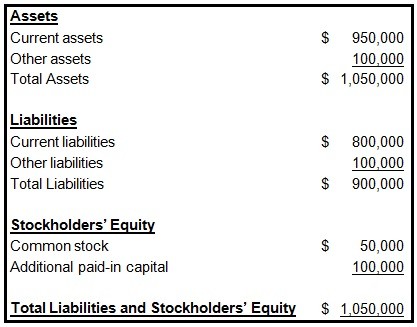
When calculating its cash-to-claims payable ratio, Rouge would correctly divide its:
- A. Cash by its reported claims only
- B. Cash by its reported claims and its incurred but not reported claims (IBNR)
- C. Reported claims by its cash
- D. Reported claims and its incurred but not reported claims (IBNR) by its cash
Answer: B
NEW QUESTION 4
The Chamber Health Plan reimburses primary care physicians on a monthly basis by using a simple capitation method. Chamber assumes an annual utilization rate of three visits per year. The FFS rate per office visit is $75, and all plan members are required to make a $10 copayment for each office visit. This information indicates that the capitation rate that Chamber calculates per member per month (PMPM) is equal to:
- A. $6.25
- B. $16.25
- C. $18.75
- D. $21.25
Answer: B
NEW QUESTION 5
The Montvale Health Plan purchased a piece of real estate 20 years ago for $40,000. It recently sold the real estate for $80,000 and reported a capital gain of $40,000 on this sale. Even though the purchasing power of the dollar declined by half during this period and Montvale realized no actual gain in purchasing power, Montvale recorded in its accounting records the $40,000 gain from this sale. This situation best illustrates the accounting concept known as the:
- A. Measuring-unit concept
- B. Time-period concept
- C. Full-disclosure concept
- D. Concept of periodicity
Answer: A
NEW QUESTION 6
The NAIC has developed a risk-based capital (RBC) formula for all health plans that accept risk. One true statement about the RBC formula for health plans is that it
- A. is a set of calculations, based on information in a health plan's annual financial report, that yields a target capital requirement for the organization
- B. fails to take into account a health plan's underwriting risk, which is the risk that the premiums the health plan receives will be insufficient to pay for the healthcare services it provides to its plan members
- C. applies to all health plans in the United States
- D. fails to assess the specific level of risk faced by each health plan
Answer: A
NEW QUESTION 7
The Swann Health Plan excludes mental health coverage from its basic health benefit plan. Coverage for mental health is provided by a specialty health plan called a managed behavioral health organization (MBHO). This arrangement recognizes the fact that distinct administrative and clinical expertise is required to effectively manage mental health services. This information indicates that Swann manages mental health services through the use of a:
- A. Formulary
- B. Risk pod
- C. Carve-out
- D. Case rate
Answer: C
NEW QUESTION 8
Several federal agencies establish rules and requirements that affect health plans. One of these agencies is the Department of Labor (DOL), which is primarily responsible for ______.
- A. Issuing regulations pertaining to the Health Insurance Portability and Accountability Act (HIPAA) of 1996
- B. Administering the Medicare and Medicaid programs
- C. Administering ERISA, which imposes various documentation, appeals, reporting, and disclosure requirements on employer group health plans
- D. Administering the Federal Employees Health BenefitsProgram (FEHBP), which providesvoluntary health insurance coverage to federal employees, retirees, and dependents
Answer: C
NEW QUESTION 9
The following paragraph contains an incomplete statement. Select the answer choice containing the term that correctly completes the statement. Health plans face four contingency risks (C-risks): asset risk (C-1), pricing risk (C-2), interest-rate risk (C-3), and general management risk (C-4). Of these risks, _______ is typically the most important risk that health plans face. This is true because a sizable portion of the total expenses and liabilities faced by a health plan come from contractual obligations to pay for future medical costs, and the exact amount of these costs is not known when the healthcare coverage is priced.
- A. Asset risk (C-1)
- B. Pricing risk (C-2)
- C. Interest-rate risk (C-3)
- D. General management risk (C-4)
Answer: B
NEW QUESTION 10
In order to determine a health plan's quick liquidity ratio, a financial analyst would divide the health plan's
- A. Total assets not invested in affiliates by its total liabilities
- B. Liquid assets by its total liabilities
- C. Liquid assets by its contractual reserves
- D. Total assets by its contractual reserves
Answer: C
NEW QUESTION 11
The Lighthouse health plan operates in a state that allows the health plan to use an underwriting method of determining a group's premium in which underwriters treat several small groups as one large group for risk assessment purposes. This method, which helps Lighthouse more accurately estimate a small group's probable claims costs, is known as
- A. Case stripping
- B. The low-option rating method
- C. The rate spread method
- D. Pooling
Answer: D
NEW QUESTION 12
The process of converting the present value of a specified amount of money to its future value is known as
- A. Capital budgeting
- B. Compounding
- C. Capital rationing
- D. Discounting
Answer: B
NEW QUESTION 13
The following information was presented on one of the financial statements prepared by the Rouge Health Plan as of December 31, 1998: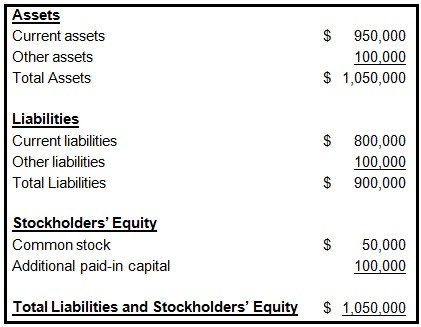
This type of financial statement is called:
- A. A balance sheet
- B. An income statement
- C. A statement of owners’ equity
- D. A cash flow statement
Answer: C
NEW QUESTION 14
The Eagle health plan wants to limit the possibility that it will be held vicariously liable for the negligent acts of providers. Dr. Michael Chan is a member of an independent practice association (IPA) that has contracted with Eagle. One step that Eagle could take in order to limit its exposure under the theory of vicarious liability is to
- A. Supply D
- B. Chan with office space
- C. Employ nurses, laboratory technicians, and therapists to support Dr.Chan
- D. Be responsible for keeping D
- E. Chan's medical records updated
- F. Ensure that documents provided to D
- G. Chan's patients describe him as an independent practitioner
Answer: D
NEW QUESTION 15
Two sets of financial accounting standards are generally accepted accounting principles (GAAP) and statutory accounting practices (SAP). One true statement about these financial accounting standards is that
- A. State laws and regulations in the United States govern the implementation of GAAP, but not the implementation of SAP
- B. Health plans must prepare their financial statements for their external users according to applicable laws, regulations, and accounting principles, particularly GAAP
- C. GAAP specifically focuses on the requirements of insurance regulators and policyholderinterests
- D. The Financial Accounting Standards Board (FASB) is a private organization whose purpose is to establish and promote SAP in the United States
Answer: B
NEW QUESTION 16
The Poplar Company and a Blue Cross/Blue Shield organization have contracted to provide a typical fully funded health plan for Poplar's employees. One true statement about this health plan for Poplar's employees is that
- A. Poplar bears the entire financial risk if, during a given period, the dollar amount of services rendered to Poplar plan members exceeds the dollar amount of premiums collected for this health plan
- B. Poplar and the Blue Cross/Blue Shield organization share the financial risk of paying for claims under Poplar's health plan
- C. The Blue Cross/Blue Shield organization, upon acceptance of a premium, becomes the group plan sponsor for Poplar's health plan
- D. The Blue Cross/Blue Shield organization, upon acceptance of a premium, bears the entire financial risk of paying for the administrative expenses associated with health plan operations
Answer: D
NEW QUESTION 17
......
Recommend!! Get the Full AHM-520 dumps in VCE and PDF From Downloadfreepdf.net, Welcome to Download: https://www.downloadfreepdf.net/AHM-520-pdf-download.html (New 215 Q&As Version)